



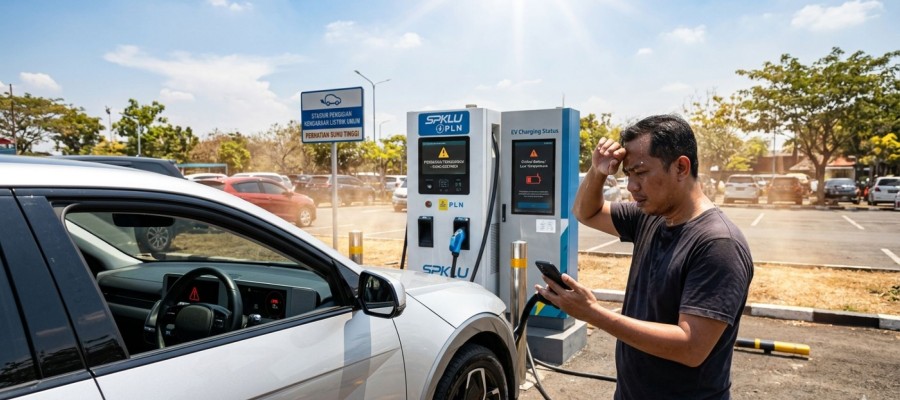


The popularity of electric vehicles (EVs) continues to soar thanks to their promise of efficiency and environmental friendliness. However, behind their technological sophistication, electric vehicles have one inherent weakness that new users often overlook: sensitivity to temperature.
Just as humans feel sluggish when it’s too hot or shiver when it’s too cold, the lithium-ion batteries in electric vehicles also have a “comfort zone” for optimal performance. When ambient temperatures fall outside this zone, performance and range can drop drastically.
When it’s too cold, the electrolyte fluid inside the battery becomes thicker. This hinders ion movement, preventing the electric current from flowing smoothly. As a result, charging times can be longer and driving range is reduced.
When It’s Too Hot (Overheating Effect): High temperatures accelerate chemical degradation within the battery cells. Consequently, the cooling system works harder, causing the battery to drain quickly and requiring frequent recharging. Typically, ambient temperatures above 35 degrees Celsius can accelerate battery degradation.
Tips for Keeping Your Battery in Good Condition in Extreme Temperatures
While extreme temperatures are unavoidable, there are several smart steps electric car owners can take to minimize their impact, including:
Electric cars are indeed highly advanced, but they are still machines governed by the laws of chemistry. Understanding how batteries react to temperature doesn’t mean electric cars are unsuitable for use; rather, it helps us as users manage them more wisely. With proper temperature management, your electric car will not only have more consistent range but also a significantly longer battery lifespan.
Source: cnnindonesia.com
<< Back