





Interest in electric vehicles (EVs) among Indonesians has surged sharply in recent years. Uncertainty surrounding fuel prices and various tax incentives offered by the government have become the main draws for consumers looking to switch from conventional vehicles.
However, for drivers accustomed to internal combustion engines (ICE), switching to EVs requires some adaptation. To ensure you don’t make a misstep, here’s a practical guide for those of you looking to start your journey with an electric car:
Unlike gasoline cars that rely on combustion in the engine, electric cars are entirely powered by an electric motor that draws energy from a battery. The result? Instant acceleration, a very quiet cabin due to minimal vibration, and most importantly: zero exhaust emissions.
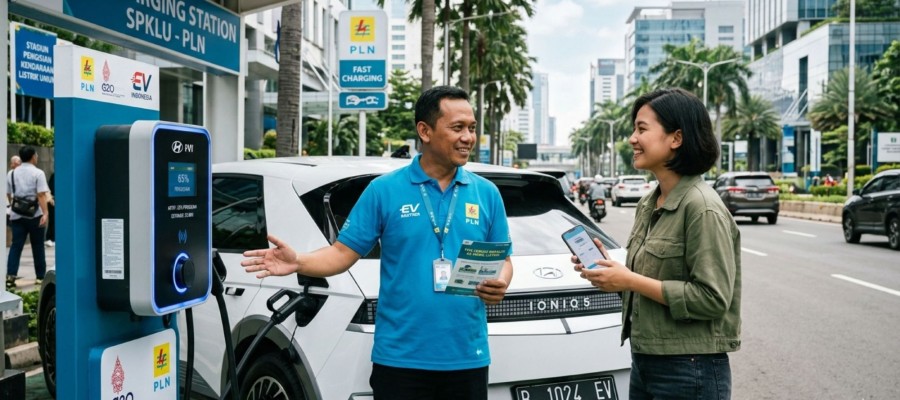
Charging an electric vehicle isn’t much different from charging a smartphone. You have two main options: Home Charging, which uses a wallbox typically included in the purchase package. This is very convenient to do at night, and Public EV Charging Stations (SPKLU). For long trips, you can use charging facilities at public locations. Make sure you have the relevant app to track the nearest charging station.
Each model has varying battery capacities and ranges. Before purchasing, make sure the battery capacity aligns with your daily routine. If you frequently travel between cities, choose a model with a range of at least 400–500 km on a single charge to minimize range anxiety.
One of the biggest advantages of electric vehicles is their low operating costs. Since they have far fewer moving parts than gasoline-powered cars (such as spark plugs, engine oil, or complex transmissions), routine maintenance costs for electric vehicles can be up to 50–70% lower. Maintenance typically focuses only on the cooling system, tires, brake pads, and regular battery health checks.
Driving an electric car requires slightly different techniques to maximize battery efficiency. Take advantage of the Regenerative Braking feature, where the electric motor automatically recharges the battery when you release the accelerator pedal or apply the brakes. This habit not only saves energy but also extends the lifespan of your brake pads.
Source: cnnindonesia
<< Back