



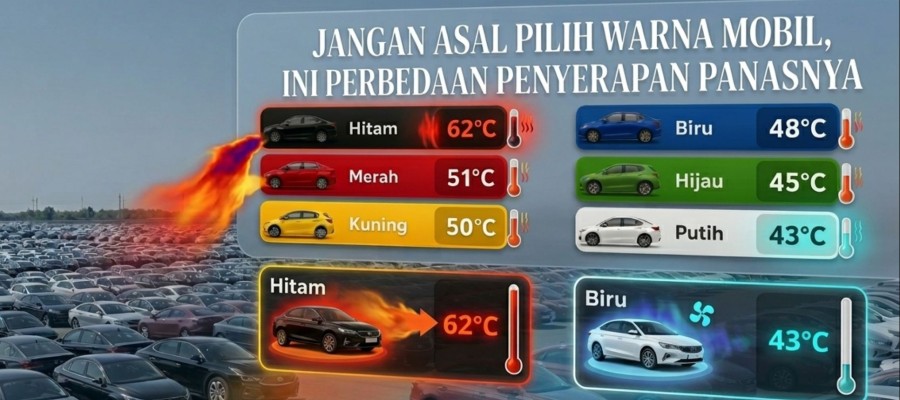


It turns out that car color isn't just about aesthetics or exterior appearance. Your choice of vehicle color directly influences the temperature of the car's body and interior when exposed to direct sunlight.
It's no secret that dark-colored cars tend to absorb significantly more heat. Conversely, light colors are better at reflecting sunlight, allowing the car's surface and interior temperatures to remain lower.
A test showed a significant difference in the surface temperature of a car's body based on its color after being exposed to the sun. Here's the ranking, from hottest to coolest:
From the data above, it's clear that the difference between the darkest color (black) and the lightest color (white) can reach tens of degrees Celsius. This, of course, directly impacts the workload of your car's air conditioning (AC) when first turned on.
However, you don't need to be discouraged if you already own a dark-colored car. The air temperature inside the cabin isn't solely determined by the exterior paint color. Several other important factors have a significant impact, including:
So, what color would you choose for your daily vehicle?
Source: Cartalog.ids
<< Back