



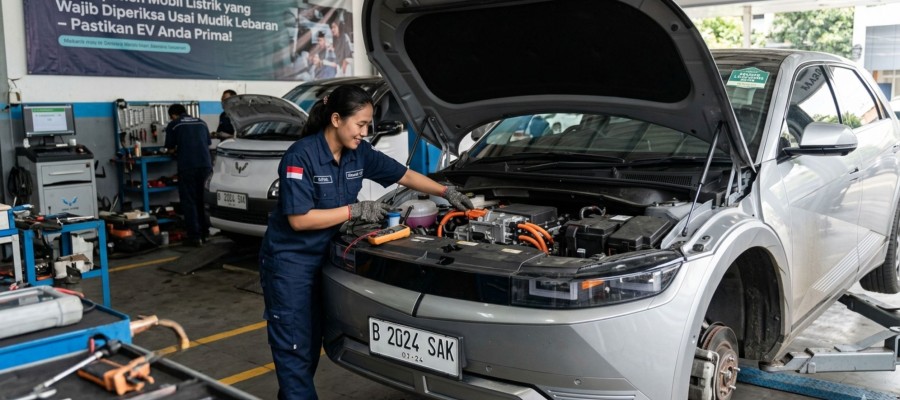


Traveling home for Eid al-Fitr in an electric vehicle (EV) certainly offers a unique experience, especially in terms of efficiency and comfort. However, after a long-distance trip with a heavy load and varying charging infrastructure, electric vehicles require special attention to ensure they remain in top condition for daily use.
Here are some important things you must check on your electric vehicle after returning from your trip:
1. Battery Health Check (State of Health)
The battery is the most vital component. During the trip, repeated use of Fast Charging (DC) in a short period can significantly increase battery temperature. Check for any drastic drop in maximum range after a full charge.
2. Check Tire and Suspension Condition
Electric vehicles are heavier than conventional cars due to the battery pack. Long-distance travel with a full load and unpredictable road conditions can affect the tires. Re-adjust tire pressure to the manufacturer’s standard. Check for uneven wear (a sign of misalignment) or bulges caused by hitting potholes.
3. Cooling System (Coolant)
The cooling system in an EV not only cools the cabin but also keeps the battery and electric motor temperatures stable. Make sure the coolant level is within the safe range. Check for leaks under the car, especially after driving on rough terrain.
4. Cleanliness of the Engine Compartment and Charging Port
Dust, dirt, or rainwater residue from your trip home can accumulate in sensitive areas. Ensure the charging port is free of dirt or foreign objects that could interfere with the connection during charging. Simply use a damp cloth to clean the electric motor area. Avoid spraying high-pressure water directly onto electrical components.
5. Check the Regenerative Braking System
Although electric vehicles rarely use physical brakes thanks to regenerative braking, conventional brake components (rotors and pads) still need to be inspected. Ensure there is no dirt or gravel lodged between the brake rotors, which can cause squeaking noises or reduce braking efficiency.
Source: GridOto.com
<< Back